Every other week we send members one short, evidence-based read on strength, healthy aging and staying independent.
We’re Oscar Esquivel and Roxana Yglesias, the owners of Alloy Personal Training, and we both hold PhDs in food science. We read this literature the way we were trained to: primary sources, stated limitations, and a clear line between what is established and what is still being studied. Every claim below links to the institution it came from — the World Health Organization, the CDC, Cochrane, the Mayo Clinic, the American College of Sports Medicine and the peer-reviewed journals — so you can read the original and judge it yourself. That’s the contribution we want to make to how our members think about their own health.
MUSCLE: ORGAN OF LONGEVITY
2026-10-01
Sarcopenia is the progressive, age-related loss of muscle mass and function, and it starts earlier than most people expect. Harvard Health and NIH News in Health give the same rate: about 3% to 5% per decade, starting at age 30.
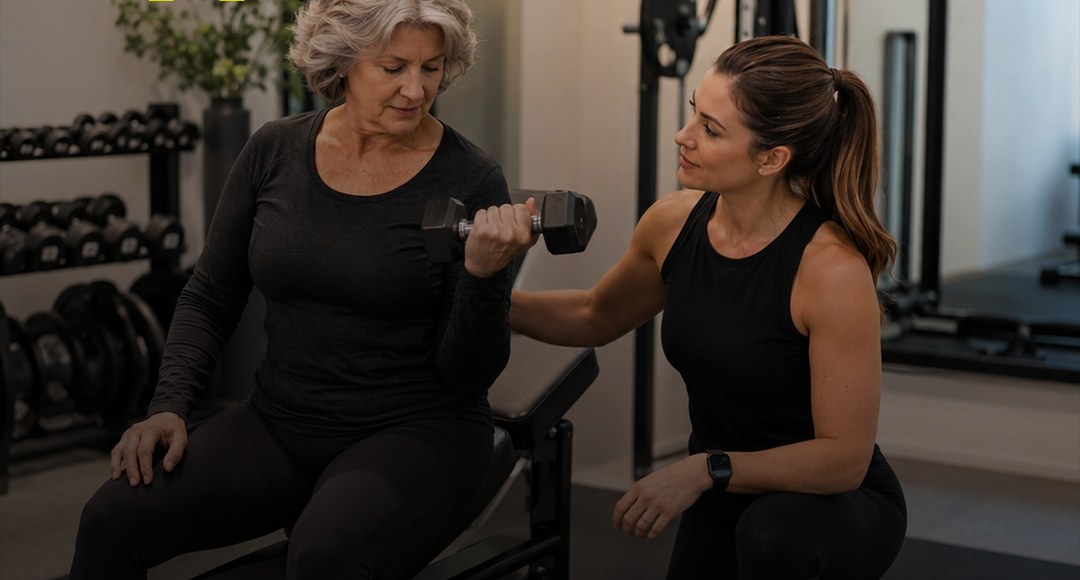
- Harvard Health — A guide to combatting sarcopenia and preserving muscle mass as you get olderThe 3–5% per decade rate, the prevalence estimates, and protein at 1 to 1.2 g/kg.
- NIH News in Health — Slowing SarcopeniaThe same 3–5% rate, and the grip and walking-speed findings.
- National Institute on Aging — How can strength training build healthier bodies as we age?The 30% mobility figure, and trainer-led small group research at Tufts.
- Cleveland Clinic — Sarcopenia (Muscle Loss)Resistance training plus protein, 20 to 35 grams per meal.
- Endocrine Reviews — Muscle–Organ Crosstalk: The Emerging Roles of MyokinesSkeletal muscle as an endocrine organ. Open access.
- Harvard Health — Beyond protein: 6 other nutrients that help prevent muscle lossMagnesium, vitamin D, omega-3s and water, alongside protein.
EXERCISE IS NOT OPTIONAL
2026-09-01
For most of our lives, exercise was framed as self-improvement — something you did to look better or blow off steam. Medicine has stopped treating it that way. Physical activity is now handled like blood pressure: a clinical measure with consequences.

- World Health Organization — Physical activityThe 20–30% figure, and the global scale of inactivity.
- CDC — Physical Activity Among Adults, United StatesThe official numbers on how few adults meet the strength guideline.
- British Journal of Sports Medicine — Muscle-strengthening activities and mortalityThe 10–17% finding. Open access.
- Cochrane — Exercise for preventing falls in older peopleThe 23% falls reduction, from the gold standard of evidence review.
- Mayo Clinic Press — The many benefits of resistance training as you ageThe blood-pressure and muscle-fiber findings, including starting after 70.
- American College of Sports Medicine — 2026 resistance training guidelinesThe 2026 guidelines: all major muscle groups, twice a week.
Written for Alloy members at our Teravista and Lakeline studios. Educational only — not medical advice. Talk to your doctor before changing how you train, especially if you are managing a heart, joint or metabolic condition.